
A transgenic large animal platform which delivers human-like tumors on demand
Bridges the gap between small animal testing and human clinical trials.
Translational models generate predictive preclinical data, and allow for simultaneous testing of safety, efficacy and metabolic effects.
Proven across a range of tumor models, with 85%+ success rate for tumor induction.
How it works
The Oncopig has a stop sequence in its genetic code, repressing expression of the KRAS and TP53 genetic mutations (found in two-thirds of human cancers).
This stop sequence is removed by an adenoviral vector encoding for Cre recombinase, introduced via various methods at the desired sites for tumor formation.
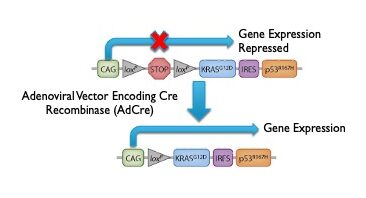
This causes these mutations to be expressed, resulting in highly relevant tumors in approximately two weeks. Tumor induction rate is approximately 85%, and so with multiple induction sites in each animal, we have nearly a 100% success rate per animal induced.
Regarding tumor histology, we have two different types of models: Non-specific models, resulting in solid tumors containing a variety of cancer cells, and Specific models, where a defined tumor histology (e.g. hepatocellular carcinoma) can be generated.
Frequently asked questions
Is the Oncopig suitable for testing all types of cancer therapeutics?
The Oncopig has been successfully across a range of cancer therapeutics. Experience with testing of medical devices includes:
- Arterially-directed/intratumoral drug delivery
- Ablation
- Intratumor drug delivery
- Imaging
- Radiopharmaceuticals
The platform is also well-suited for assessment of acute drug therapies, antibody-drug conjugates, and checkpoint inhibitors.
In addition, the platform is ideal for assessment of many cancer diagnostics, as “time zero” for tumor formation can be precisely defined.
Sus Clinicals’ innovation pipeline includes future models which will be tailored to meet the needs of additional therapeutics, such as immunotherapeutics, radioligands and systemic treatments.
Are you a CRO?
No, Sus Clinicals is not a CRO, but we work with top-tier CROs with large-animal testing experience and capability to perform Oncopig-based studies. We have a number of CRO partners with Oncopig experience. Some clients already have relationships with a preferred CRO, and we then work with that firm. In other cases, we will seek to match the client’s needs with the CRO best positioned to deliver against study objectives.
Can you provide Oncopigs to entities which have their own large-animal testing capability?
Yes. We provide Oncopigs to both industry and academic institutions with large-animal testing capabilities. Certain documents are needed to comply with FDA requirements in advance of shipping Oncopigs. We also provide procedures and training on tumor induction methodologies, and Sus Clinicals personnel are also available to assist upon request.
How do studies typically work?
We usually begin with a discussion to understand a client’s research needs and learning objectives, and to assess whether the Oncopig platform is well-suited to meet such objectives. We then bring in a CRO partner to discuss in more depth study design, timing, cost, etc. Once a plan is agreed, Sus Clinicals provides Oncopigs and the appropriate tumor induction methods applicable to a specific study, and the CRO proceeds with study execution. Following study completion, Sus Clinicals and the CRO meet with the client to review outcomes, lessons learned, possible follow-on work, etc.
How do we get started?
Please contact us to arrange an introductory call to discuss your preclinical research needs and to explore how the Oncopig platform could provide you the predictive data you need.